Proven Performance Through Independent Validation
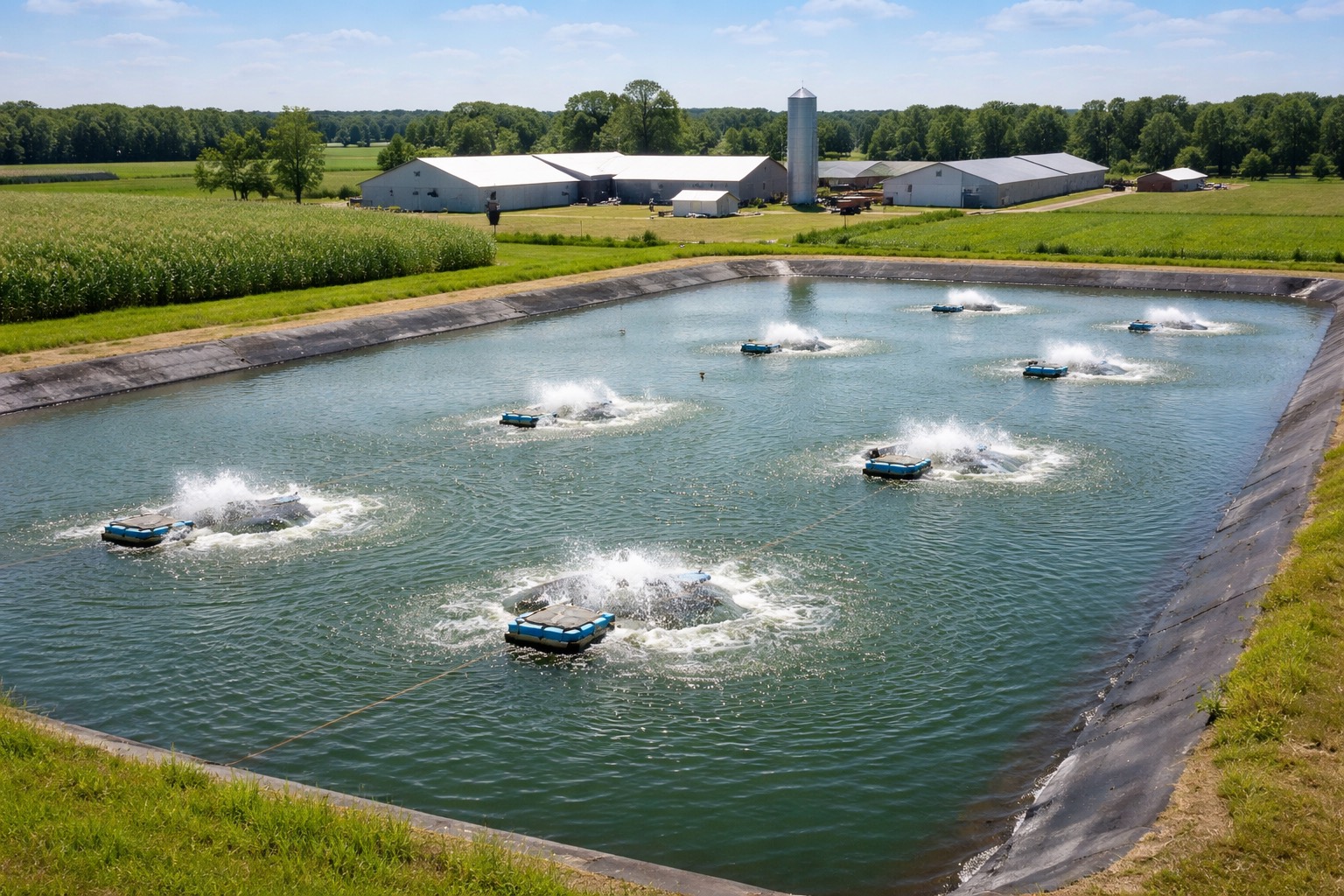 Enviro.Farm’s aerobic treatment technology has been independently validated through a multi-year
Conservation Innovation Grant (CIG) administered by the USDA Natural Resources Conservation Service (NRCS).
Enviro.Farm’s aerobic treatment technology has been independently validated through a multi-year
Conservation Innovation Grant (CIG) administered by the USDA Natural Resources Conservation Service (NRCS).
The project evaluated aerobic manure lagoon treatment across multiple livestock operations, confirming environmental, operational, and economic benefits under real-world conditions.
Project Scope and Demonstration Sites
The CIG project installed floating oxygenation and circulation units on manure lagoons at
11 livestock sites across Wisconsin, South Dakota, and Nebraska, managing manure from more than 10 million pounds of animal body weight.
The study was conducted over several years to confirm reliability, repeatability, and long-term performance under varied climates and farm conditions.
Air Quality and Emissions Reduction
The project demonstrated measurable reductions in air quality impacts by maintaining aerobic lagoon conditions that suppress anaerobic gas formation.
- Significant reduction of methane and nitrous oxide emissions
- Elimination of hydrogen sulfide, ammonia, and other noxious gases
- Odor reduction to undetectable levels based on volatile fatty acid measurements
Maintaining controlled oxygen levels prevented the formation of nitrates and nitrites that contribute to secondary emissions.
Pathogen and Odor Control
Aerobic treatment significantly reduced pathogen levels within treated lagoons.
- E. coli levels consistently reduced to below detectable or infectious thresholds
- Pathogen suppression supported by oxygenation, UV exposure, and dilution
- Odors eliminated during lagoon storage, barn cleaning, and field application
Nutrient Retention and Water Quality
The project confirmed that aerobic lagoon treatment retains nutrients in crop-ready form while improving water quality outcomes.
- Increased nitrogen retention as plant-available ammonium
- Reduced nutrient losses during storage and application
- Production of odor-free, pathogen-free liquid suitable for in-season fertigation
Operational Reliability
Equipment performance and reliability were validated over the full duration of the study.
- 100 oxygenation-circulation units deployed
- Minimal mechanical failures under harsh lagoon conditions
- Consistent oxygenation and circulation maintained over multiple years
The study addressed prior skepticism surrounding floating circulator durability and confirmed suitability for long-term agricultural use.
Economic Outcomes
Beyond environmental benefits, the project demonstrated strong economic advantages for participating operations.
- Elimination of lagoon agitation costs
- Reduced fuel use and field application expenses
- Improved crop yields through timely nutrient application
These outcomes established a clear business case for aerobic manure management independent of carbon credit markets.
Early Deployments – Proven Performance (Dairy)
The following videos document early real-world dairy deployments operating in cold-climate conditions.
The footage is presented in its original form and reflects working installations observed at the time of recording. These deployments demonstrate long-term operational principles that continue to inform Enviro.Farm’s system design today.
Conclusion
The Conservation Innovation Grant project confirmed that well-designed aerobic lagoon treatment systems are effective, reliable, and economically viable.
The findings support broader adoption of aerobic manure management as a practical solution for reducing emissions, improving nutrient efficiency, and enhancing environmental performance in agriculture.
Download CIG Executive Summary (PDF)
 The ESG Payoff: Investing in Agriculture That Regenerates