RIBC™ Mode of Action
Enviro.Farm’s core technology is built around the
RIBC™ (Rotating Inverse Biological Contactor) – a floating oxygenation and circulation system designed to transform organic waste into a stable, aerobic, nutrient-rich liquid through continuous circulation, oxygen transfer, and natural UV exposure.
Unlike conventional aeration, agitation, or blower-based systems, the RIBC™ maintains a fully aerobic water column by inducing a controlled, bottom-to-top circulation pattern that prevents sludge accumulation, odors, and greenhouse gas formation.
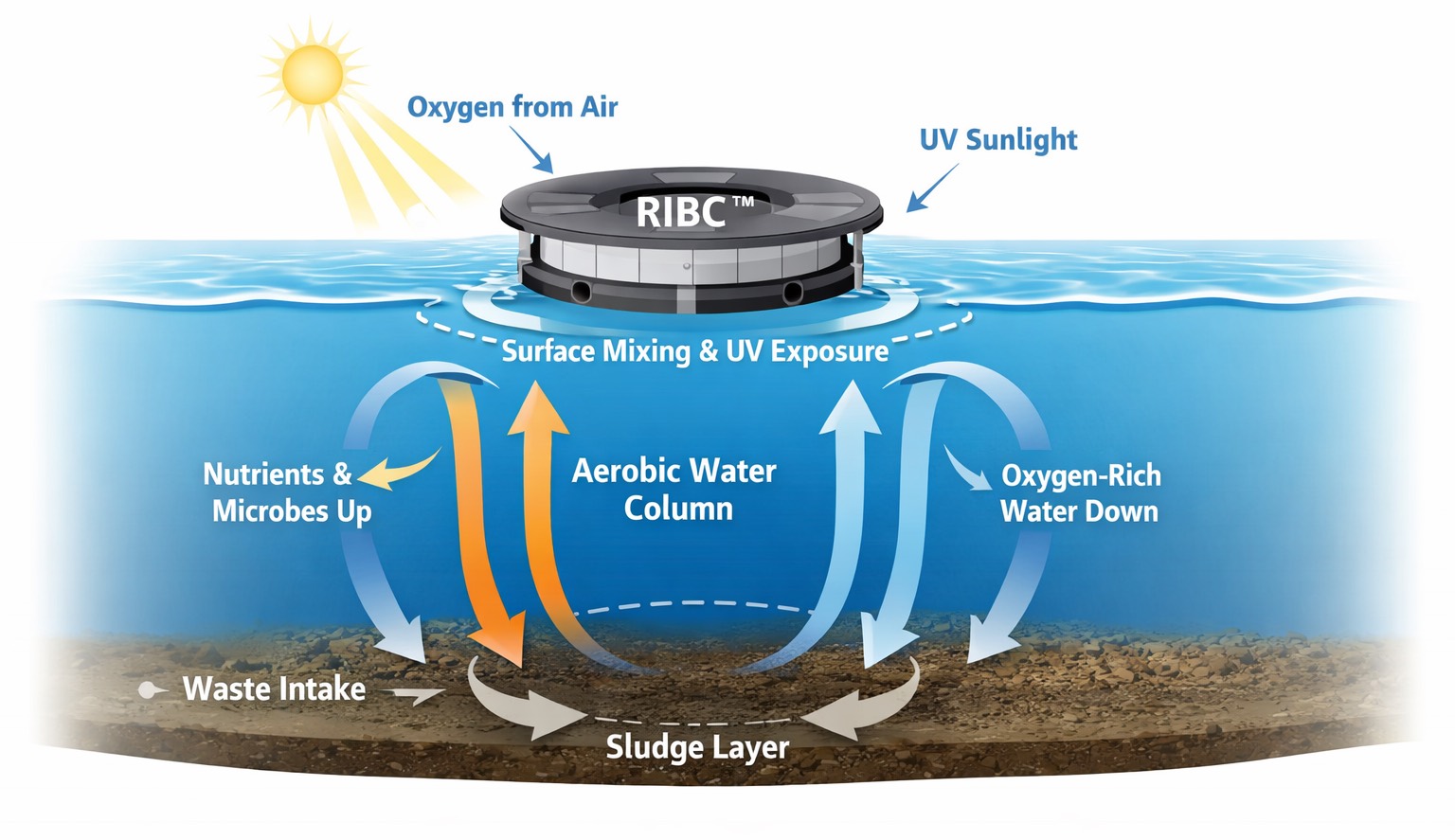
Toroidal Liquid Circulation™ (TLC™)
At the heart of the RIBC™ system is
Toroidal Liquid Circulation™ (TLC™) – a gentle but powerful vortex motion that continuously moves liquid throughout the entire treatment volume.
This circulation pattern:
- Sweeps inward across the bottom, gathering nutrients and organic material
- Lifts enzymatic nutrients upward to the surface
- Renews surface water exposure to atmospheric oxygen
- Returns oxygen-rich water and aerobic microbes back down across the bottom
By eliminating dead zones, TLC™ keeps the system fully aerobic and prevents the buildup of muck, sludge, and anaerobic conditions.
Oxygenation, UV Exposure, and Biological Action
As liquid reaches the surface, it is simultaneously exposed to:
- Atmospheric oxygen, increasing dissolved oxygen levels
- UV radiation from sunlight, which helps deactivate pathogens and degrade antibiotic residues
- Aerobic microbial activity, accelerating biological digestion
This continuous surface renewal allows microbes to efficiently break down large organic molecules while suppressing anaerobic organisms responsible for methane, ammonia, and hydrogen sulfide production.
Continuous Aerobic Treatment
The RIBC™ process combines continuous oxygenation with complete circulation to maintain a stable aerobic environment throughout the water column.
This helps prevent:
- Formation of offensive odors and gases
- Accumulation of sludge and solids
- Algal blooms and surface colonization
- Release of untreated nutrients and pathogens
With proper design, each unit circulates millions of gallons of water per hour, supporting sustained aerobic digestion across the entire treatment area.
Measurable System Performance
A single Enviro2Circulator™ (RIBC 9000 Series) delivers:
- Circulation exceeding 8.5 million gallons per hour
- Approximately 20 lbs of dissolved oxygen per hour
- Up to 240 lbs per day of BOD reduction per unit
- Conversion of sludge into approximately 99% true liquid, eliminating slurry handling
All of this is achieved using
fractional horsepower, resulting in significantly lower energy consumption compared to blower, aspirator, or venturi-based systems.
Additional Environmental Benefits
The RIBC™ Mode of Action delivers multiple downstream benefits, including:
- Elimination of odors and offensive gases
- Reduction of greenhouse gases, including methane and ammonia
- Deactivation of pathogens and antibiotic residues
- Suppression of harmful algal blooms
- Lower operating and maintenance costs
Together, these outcomes support a scalable, energy-efficient, and environmentally resilient approach to organic waste treatment.
Download RIBC™ Mode of Action (PDF)
 The ESG Payoff: Investing in Agriculture That Regenerates